A Little Breathing Room: Lake Shore Park and the History of Chicago’s Parks
Michigan Avenue has plenty going on. A couple of blocks east, Lake Shore Park gives you a little room to exhale.
Tennis courts, a running track, and roughly seven acres of neighborhood park space, with the Hancock watching over it all. You’re still very much in downtown Chicago. You just don’t have to move at downtown speed.
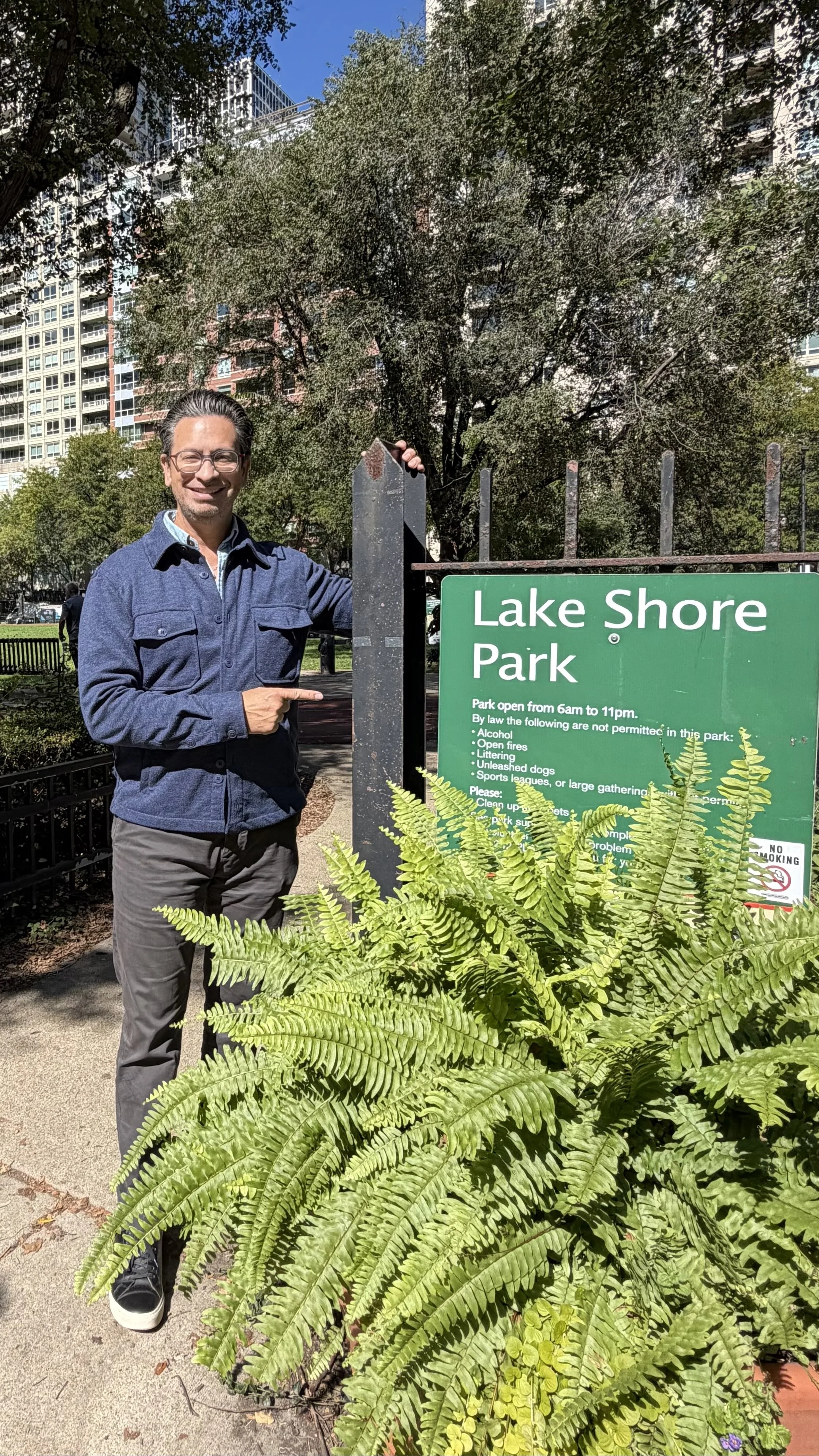
If you caught my recent Lake Shore Park reel, you saw this quieter side of Streeterville. But there’s a story behind that breathing room—and it starts long before the surrounding high-rises arrived.
That's Lake Shore Park.
How Chicago’s park system took shape
In 1869, the Illinois legislature created three separate park commissions: Lincoln, South, and West. Each operated independently, with a shared ambition to connect parks and boulevards into a ribbon of green around Chicago.
That’s a pretty good idea for a city with big plans and a growing population.
The system helped shape places we still know today, including Humboldt Park, Garfield Park, Washington Park, and Jackson Park. These landscapes became part of how Chicagoans gathered, explored, and spent their time outside.
Lake Shore Park’s history: from dunes to neighborhood gathering place
The history of Lake Shore Park starts with a shoreline that looked very different from today’s.
In 1889, the state gave the Lincoln Park Commission a section of accumulating duneland north of Chicago Avenue. Chicago challenged the commission’s ownership, and the dispute was resolved in the commission’s favor in 1895.
Even a little breathing room required some paperwork.
Plans followed for what was initially called Chicago Avenue Park. Beginning in 1897, the commission used landfill to stabilize and expand the site, with landscape improvements starting in 1900. In 1908, the expanded property became Lake Shore Playground.
The park changed again over the years, with new fieldhouses and redesigned recreation spaces. Today, its tennis courts, quarter-mile running track, and playground serve a densely populated neighborhood just steps from Michigan Avenue and the Museum of Contemporary Art.
Looking around now, it’s easy to assume this space was always here. Its history tells you how much work went into making it feel that way.
Neighborhood parks people could walk to
Chicago’s large parks offered beautiful places to spend an afternoon. But for residents of crowded industrial neighborhoods, getting to one wasn’t always easy.
In the early 1900s, the South Park Commission began developing smaller neighborhood parks that people could reach on foot. Ten opened by late 1905, introducing an idea that would become a Chicago staple: the park fieldhouse.
These buildings offered gyms, showers, reading rooms, classrooms, and affordable meals. They gave residents places to learn, exercise, meet neighbors, and find useful everyday services.
By the end of 1906, the new parks had recorded more than five million visits. Their success drew national attention, including praise from President Theodore Roosevelt in 1907.
If you’ve ever taken a class, attended a neighborhood meeting, or played basketball in a Chicago fieldhouse, you’ve experienced a version of that idea still at work.
One Chicago Park District, hundreds of neighborhood stories
By 1930, Chicago had 22 independent park agencies. In 1934, voters approved bringing them together as the Chicago Park District.
Today, the district manages more than 600 parks, over 8,800 acres of green space, and 26 miles of lakefront. That’s a lot of places to take a breather.
What interests me most, though, is how each park fits into the neighborhood around it.
At Lake Shore Park, you can step away from Michigan Avenue, walk a few laps, or sit for a while before getting back to your day. Those small routines help shape what living in Streeterville feels like.
That’s something I pay attention to when exploring any Chicago neighborhood: where people go when they have a little time to themselves.
Before your next visit, look up your neighborhood park on the Chicago Park District website. Many park pages include a short history. You might find that the place you’ve walked past a hundred times has a story you never knew.
Which Chicago park gives you a little breathing room? I’d love to hear your pick.